Research
California Conservation Genomics Project
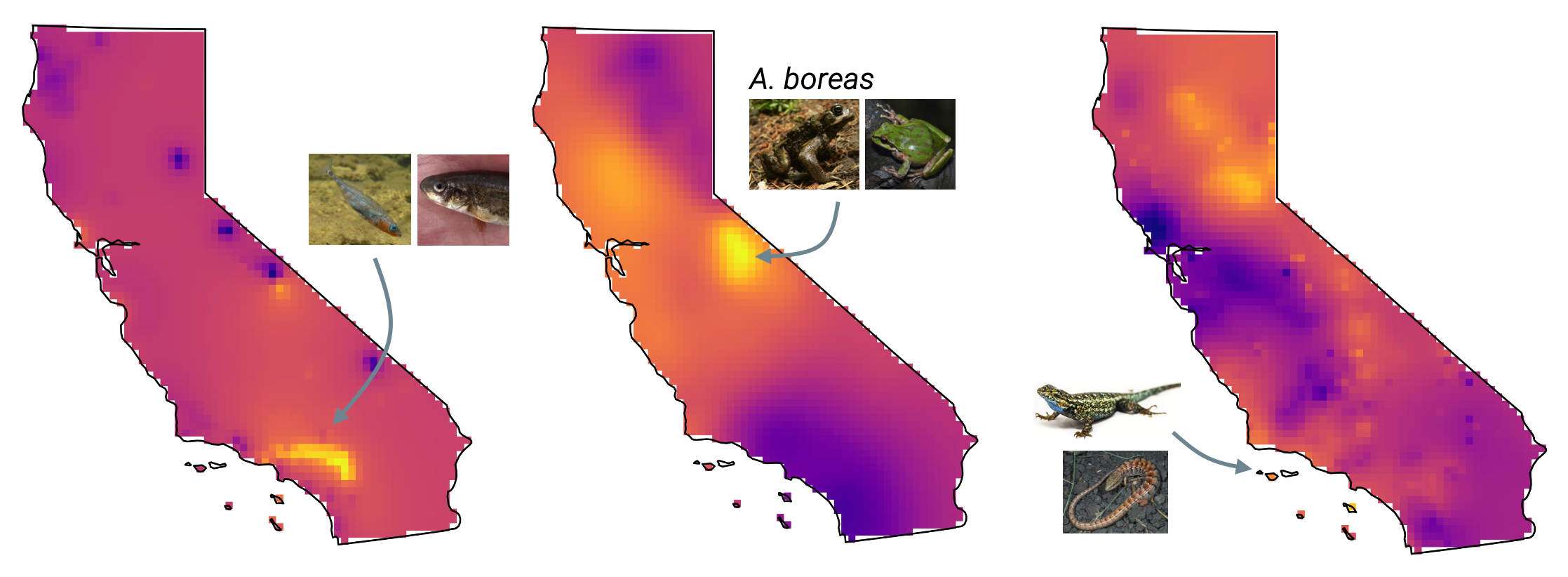
A landscape-scale approach to conservation genomics considers the health of multiple species and their populations together across a landscape. I work with Erik Enbody to investigate how genomic data can inform population health for an entire community of California wildlife through the California Conservation Genomics Project (CCGP). In particular, I study differences in mutation load in CCGP species populations. For more details, see my poster for the PEQG 2026 Conference below.
Evolutionary histories of invasive fungal pathogens causing rapid death of the native ‘ōhi‘a tree in Hawai‘i
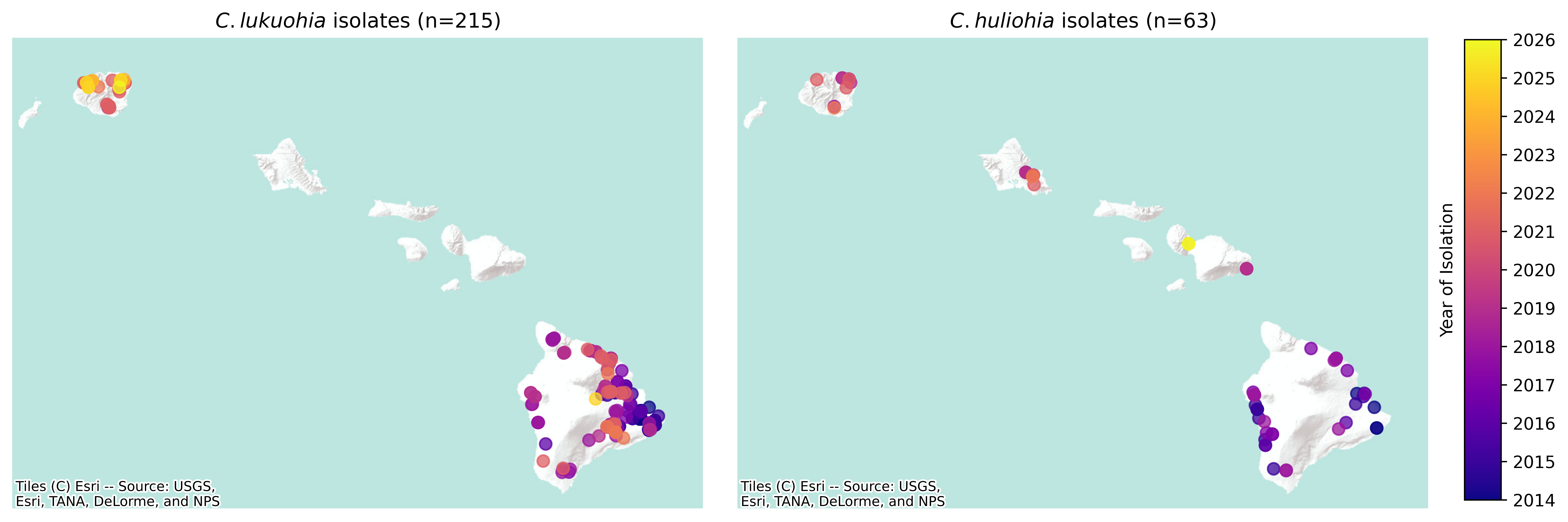
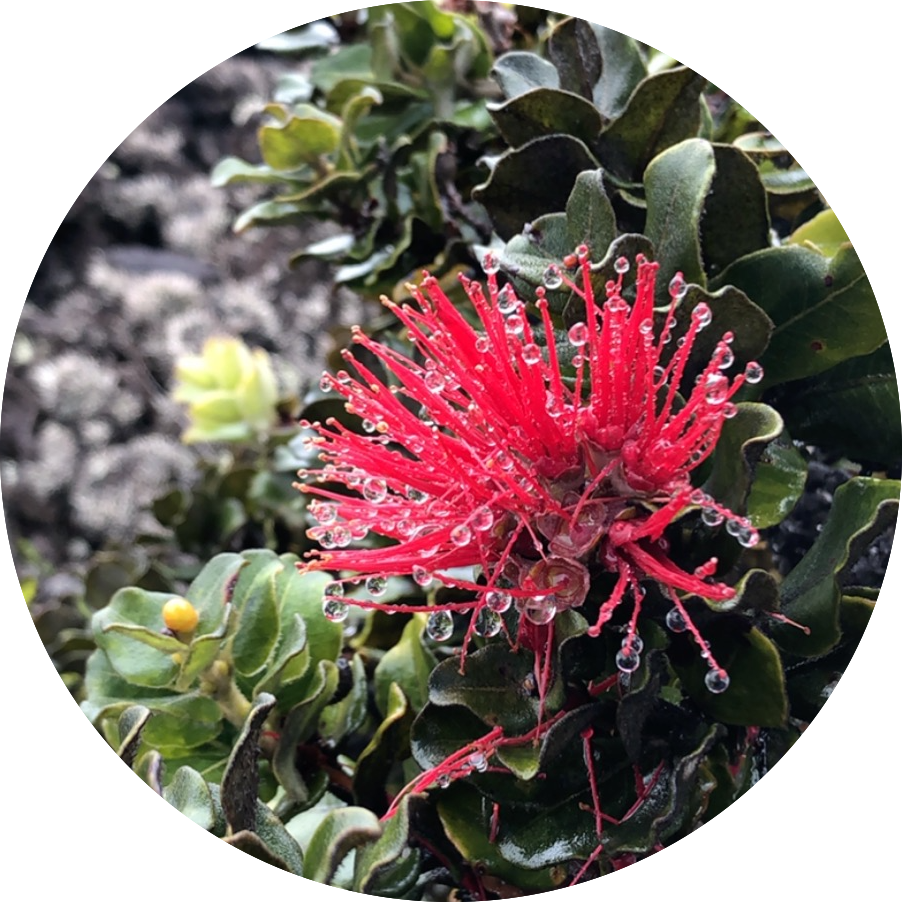
Hawai‘i’s native forests are threatened by Rapid ‘Ōhi‘a Death (ROD), a disease of the keystone and culturally significant native ‘ōhi‘a tree (Metrosideros polymorpha) species. ROD was first characterized in 2014, and is caused by two novel, non-native fungal pathogen species, Certaocystis lukuohia and huliohia. There is currently much discussion regarding the respective management strategies of the two ROD pathogens, however, their evolutionary histories and genomic variation are not well understood.
I am currently leading the generation of long-read genome assemblies for Ceratocystis lukuohia and huliohia, to facilitate comparative genomic study of the Rapid ‘Ōhi‘a Death disease. The first of these genomes for C. huliohia is available on NCBI. More to come!
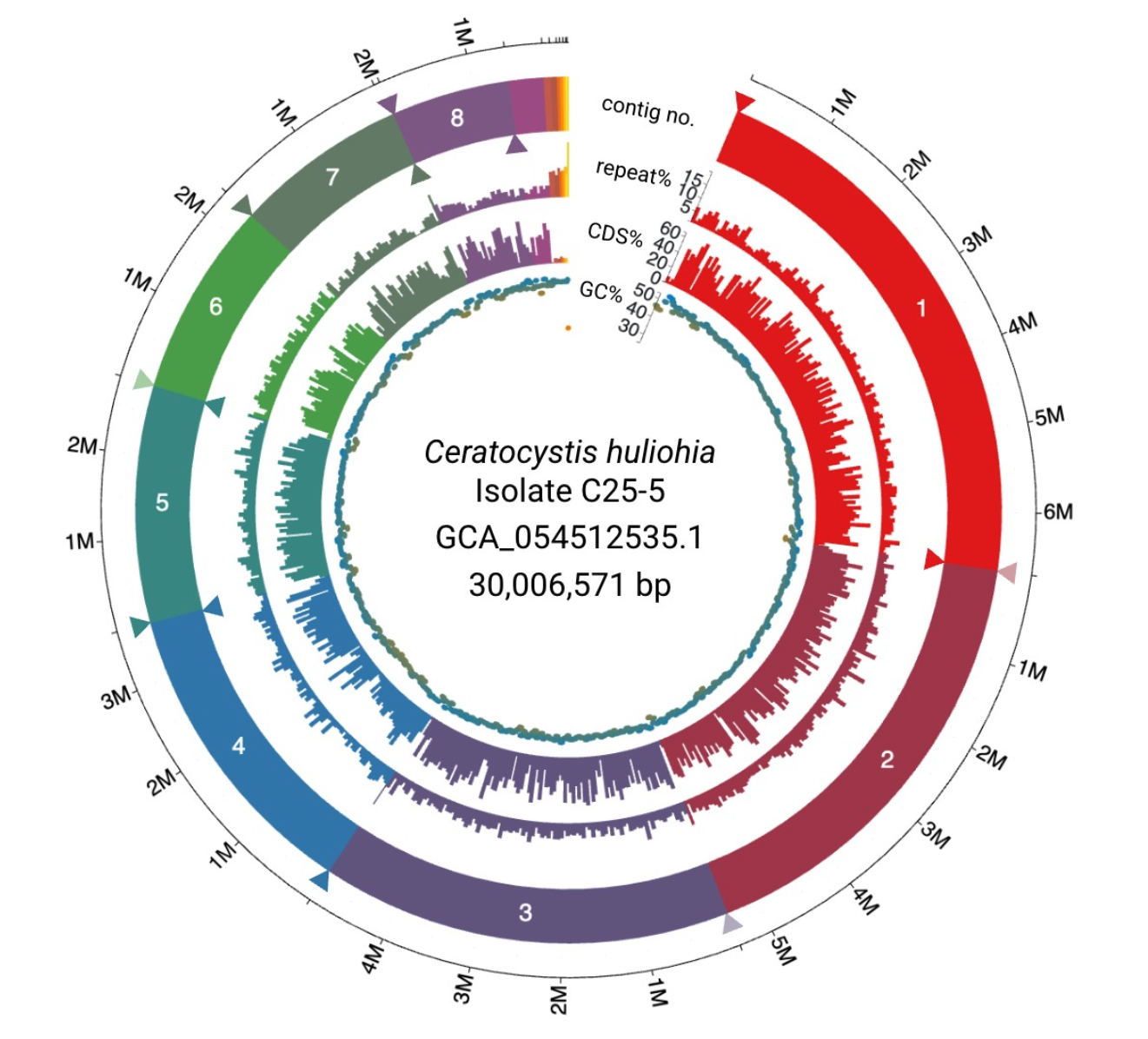
Anne Nakamoto, Lisa Keith, Qingyi Yu, Lionel Sugiyama, Xiaohua Wu, Blaine Luiz, MaryAnn Villalun, Jodie Jacobs, Russ Corbett-Detig, Ariana Cisneros, Harrison D. Heath, Cole Shanks, Faith Okamoto, Alexis Abigail Aroma Albura, Kyle Henricson, Yi Jun Lan, Henry Moore, William Seligmann, Yulia Zybina. Genome sequence of Ceratocystis huliohia, a fungal pathogen of the native ‘ōhi‘a tree in Hawai‘i. Microbiology Resource Announcements, 0:e00236-26.
Transposable element dynamics
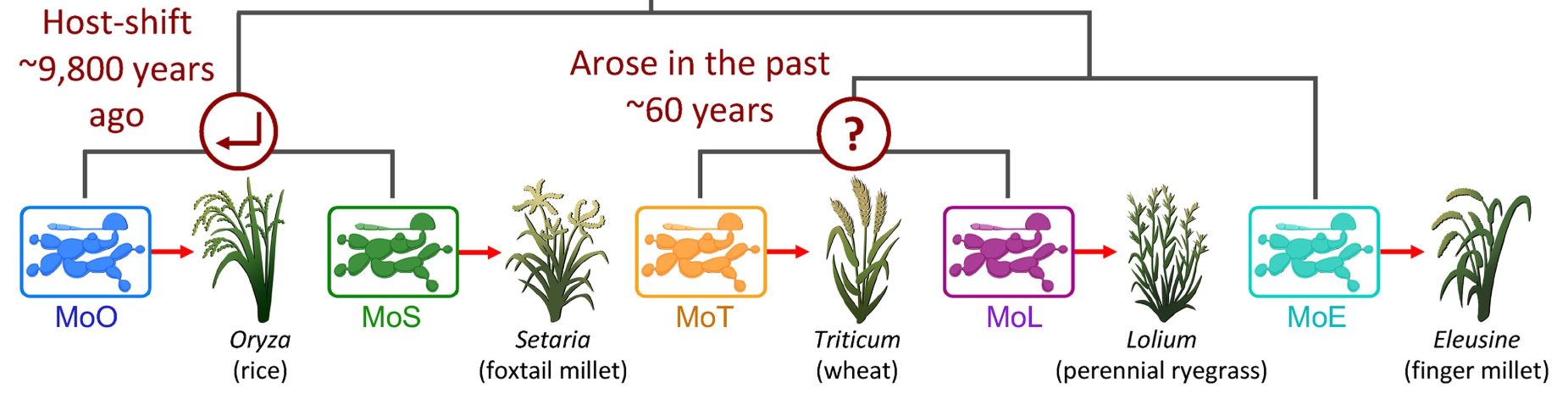
I am also interested in genome structural evolution, and specifically how transposable elements (TEs) contribute to genomic evolution. My undergraduate research in Ksenia Krasileva’s lab investigated intraspecific variation of TEs in different pathotypes of the rice blast disease pathogen, Magnaporthe oryzae. I have also contributed to work on the horizontal transfer of intron-generating TEs called introners.
Anne Nakamoto,* Pierre Joubert,* Ksenia Krasileva. Intraspecific variation of transposable elements reveals differences in the evolutionary history of fungal phytopathogen pathotypes. Genome Biology and Evolution, 15 (12), evad206. (*authors contributed equally)
Landen Gozashti, Anne Nakamoto, Shelbi Russell, Russell Corbett-Detig. Horizontal transmission of functionally diverse transposons is a major source of new introns. Proc. Natl. Acad. Sci., 122 (21) e2414761122.